Rocky Ford, Colorado
A history of Rocky Ford, the "Sweet Melon Capital of the World," from its founding along the Arkansas River to the labor conflicts of 1899.
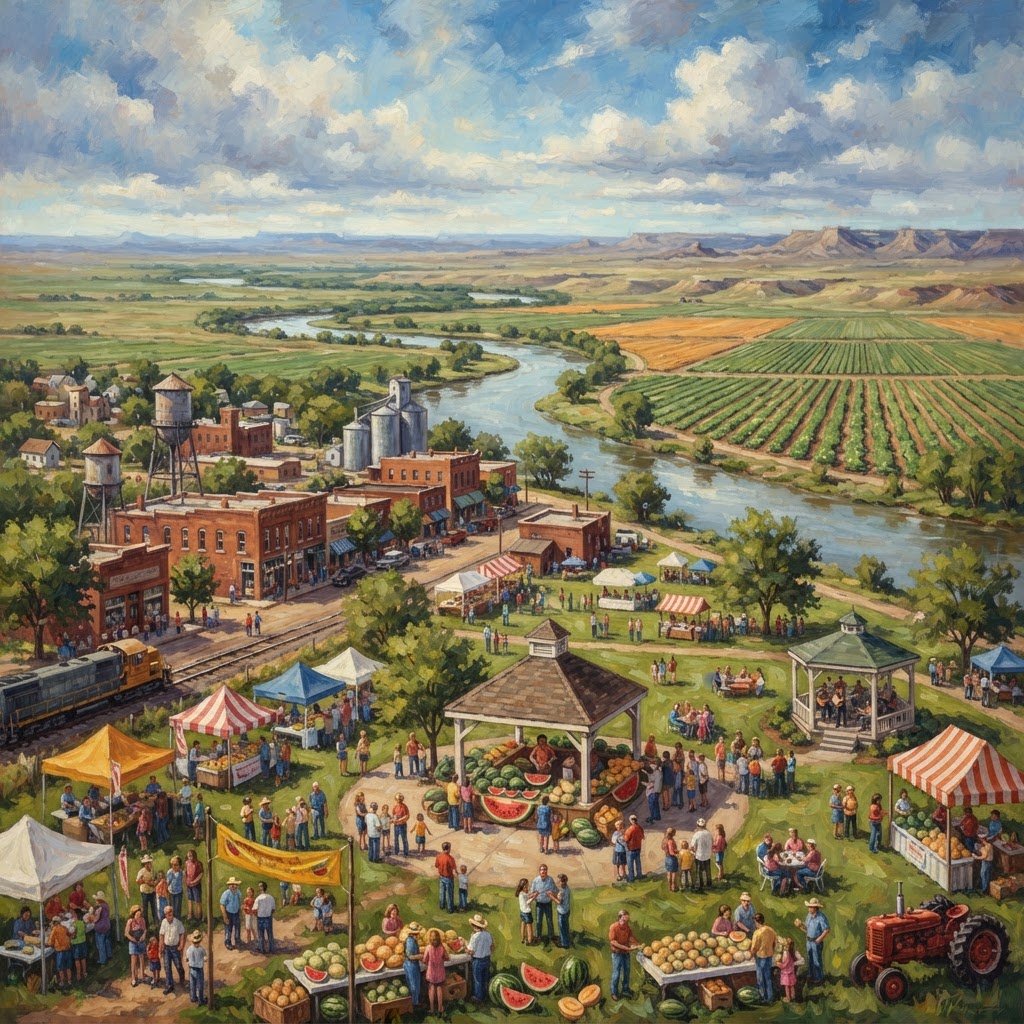
Rocky Ford, Colorado is a small agricultural town located in Otero County, in the eastern part of the state. The town has a rich history that dates back to the late 1800s, when it was founded as a center for irrigation and farming in the Arkansas River Valley.
The first settlers in the area were Native American tribes, including the Cheyenne, Arapaho, and Kiowa, who lived in the region for centuries before the arrival of European settlers. The town was named after a rocky ford on the Arkansas River, a natural crossing point for travelers and settlers.
The town of Rocky Ford was officially founded in 1887, when the Denver and Rio Grande Western Railroad built a line through the Arkansas River Valley. The railroad brought new settlers and businesses to the area, and Rocky Ford quickly grew into a thriving community.
Agriculture has always been a key part of Rocky Ford's economy, and the town is known for its production of melons, especially cantaloupes. The town's location in the Arkansas River Valley, with its rich soil and abundant irrigation, made it an ideal place for growing melons and other crops. In the early 1900s, Rocky Ford was also a center for the sugar beet industry.
One of the most notable events in Rocky Ford's history occurred in the summer of 1899, when a group of striking sugar beet workers clashed with local authorities on July 20. The confrontation, known as the Rocky Ford Massacre, resulted in the deaths of two workers and one deputy and became a turning point in the labor movement in Colorado.
Today, Rocky Ford is a thriving community of about 3,000 people, home to the Rocky Ford Museum and located near the Arkansas River and the foothills of the Rocky Mountains. Its residents are proud of the town's history and committed to preserving its unique character.